










Ericsson One Network Solutions
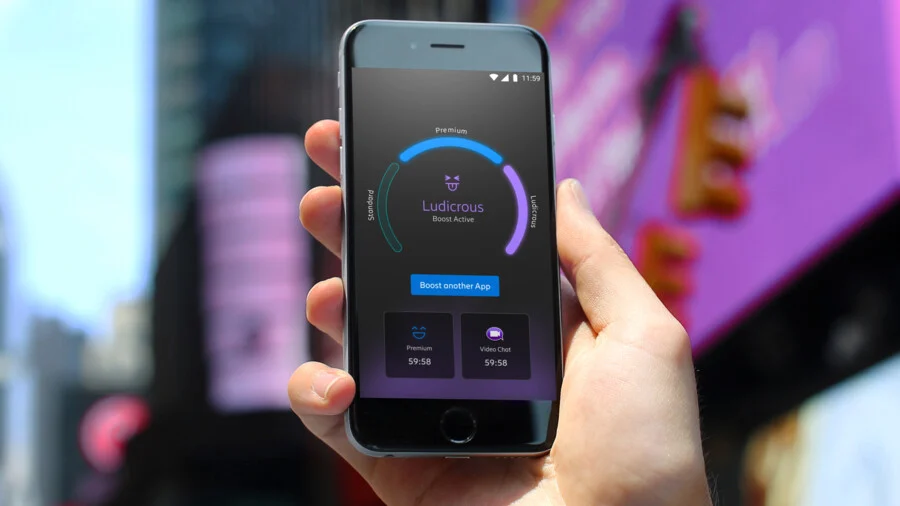
One Network Solutions was an Ericsson startup based out of Los Angeles (Playa Vista). The product suite I worked on included a SaaS enterprise web portal and a mobile app, called "One Network" (ON). The ON app brings to users' hands the capability to leverage the latest 4G and 5G technologies, especially during high mobile traffic, and increase the network performance on their mobile device through a feature called “Dynamic End-user Boost” (DEB). This feature can be enabled by both consumer and enterprise users to provide an enhanced network experience. The following is a holistic case study that encompasses the major stages of my Ericsson journey working on this product, influencing change management, and pushing for the adoption of user centric design methods.
My role: Product design, user research, architecture, iconography.
OVERVIEW
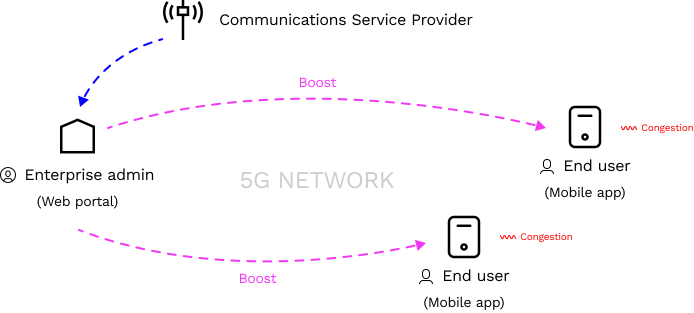
The essence of the product lent itself well to a B2B2C model. For example, through a subscription from a Communications Service Provider (CSP), an enterprise admin could distribute the DEB feature from the web portal and onto the end user's mobile device. The boost is strictly leveraging cellular network capabilities rather than the typical Wi-Fi network. This functionality can also be triggered directly from the mobile app, without relying on an enterprise admin.
R&D
As part of the research and development group within One Network Solutions, I led design efforts for a small, but mighty UX team focused on creating a new product offering. Our time-sensitive mission as a startup was to find product market fit in the complex world of communication service providers. Working closely with partners in product, engineering, and marketing for nearly two years, we were able to sign a commercial agreement with SmarTone, a leading telecommunications provider based in Hong Kong.
PROCESS
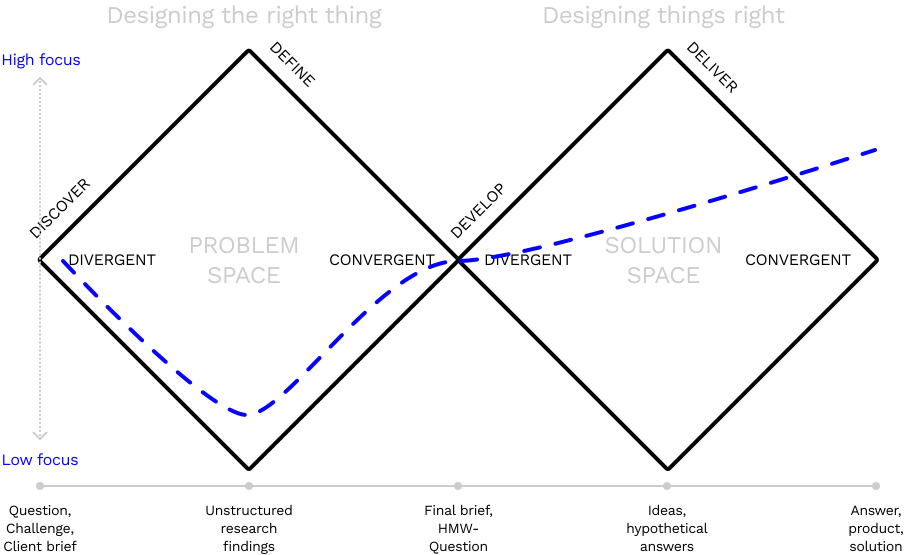
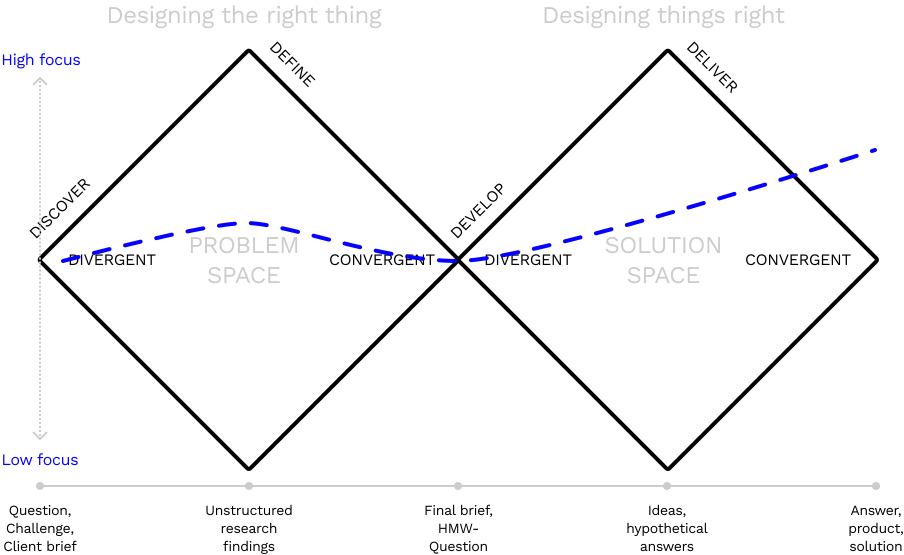
From day one, we were in a constant reactionary mode as a UX team. This was a symptom of finding product market fit and proving our potential value to Ericsson's upper management. Thus, there was minimal research done in the early stages. We often dove straight into high-fidelity, market-ready designs to meet deadlines rather than focusing on the problem space and empathy-driven solutions. The diagram to the right illustrates our general approach for the first several months.
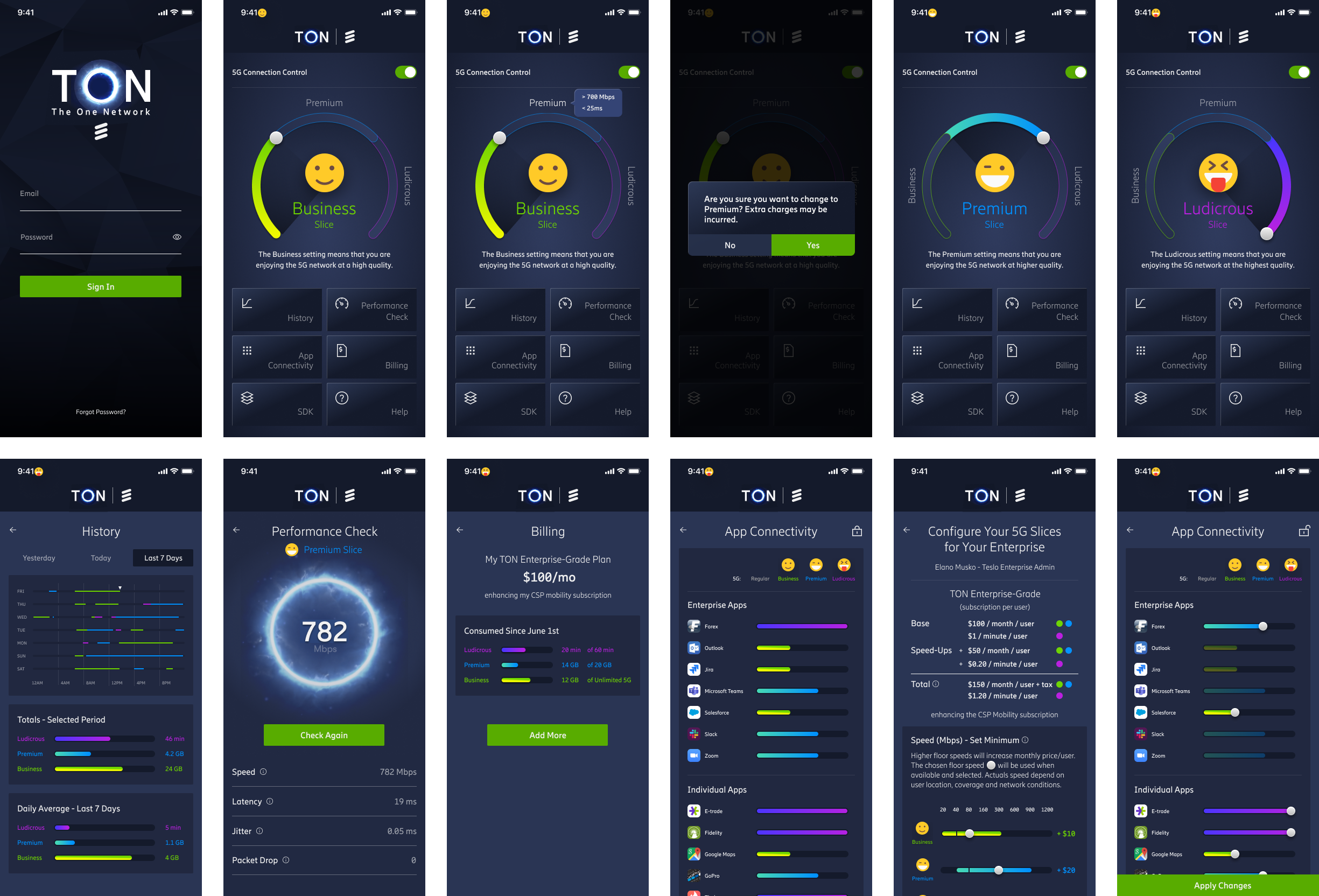
I worked primarily with product management to curate and compose the elements towards the vision. Here are some of the results for the initial product concept, which was originally called "The One Network" (TON) mobile app.
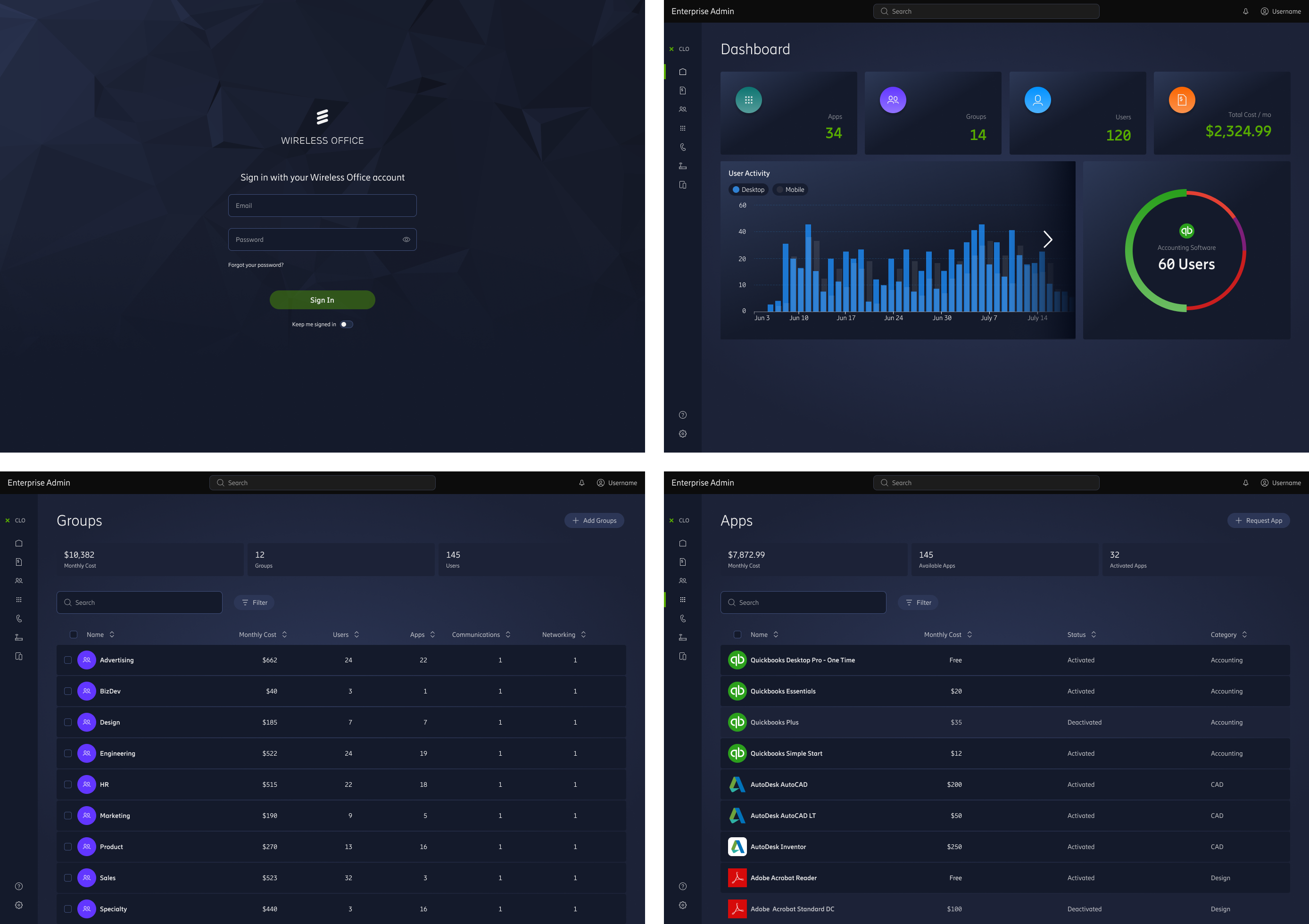
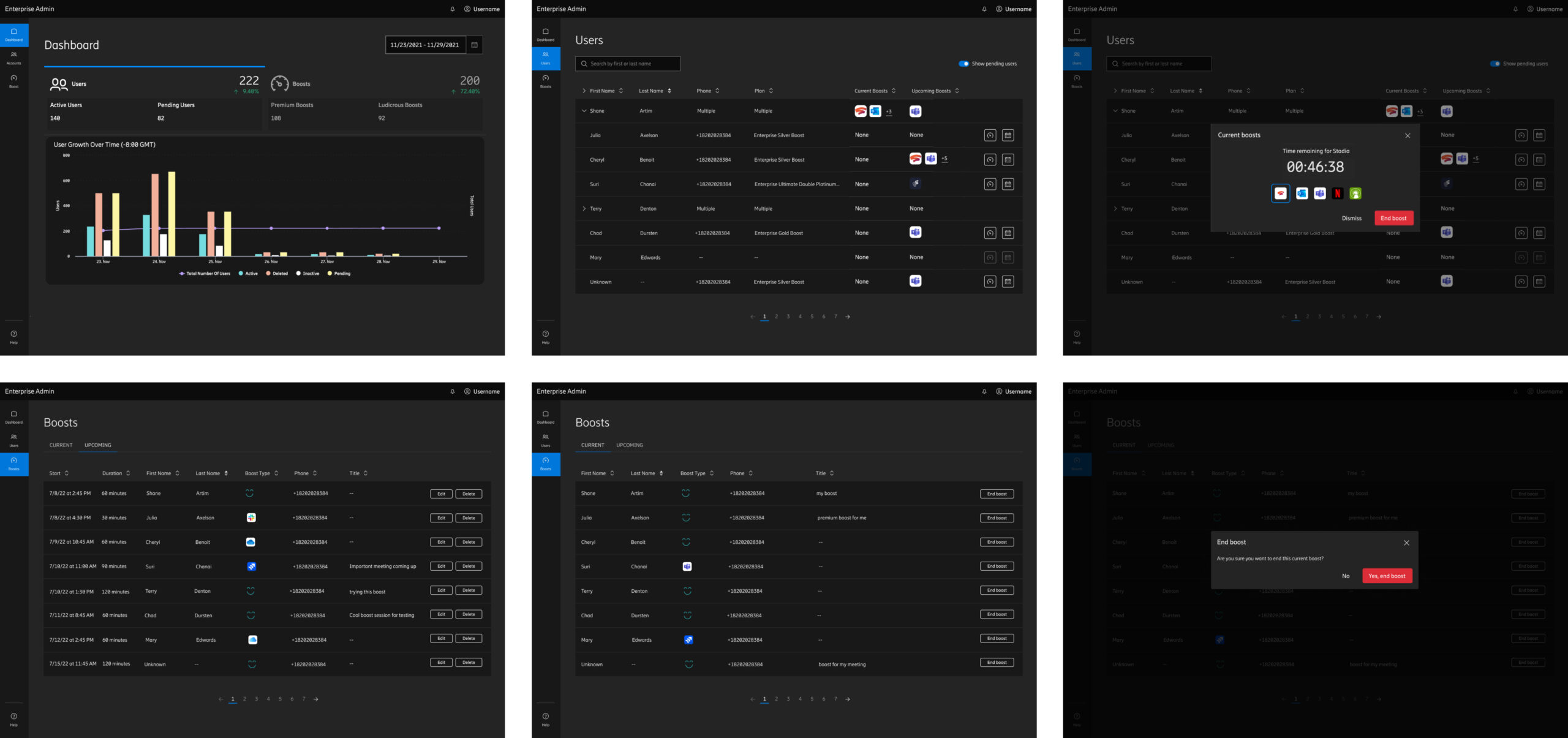
And below are some early renditions of its companion, the enterprise web portal. Although the screens may look visually put-together as a functional product, they did not go through much rigor or user validation.
GRADUAL SHIFT
As the weeks passed, the scramble to prove our startup viability became less frequent. Fortunately, this gave me and the R&D group a chance to lean further towards designing the right thing in terms of our process and approach. This slow pivot ultimately helped create a more solid solution that was based on qualitative research, albeit minimal, as well as increased cross-functional efforts with other leads from engineering, product management, marketing, and systems architecture.
USER RESEARCH
I took advantage of our shift in approach and conducted a blend of user interviews and usability tests with several Ericsson employees. These studies were limited to internal participants as the product was deemed highly confidential at the time.
Nevertheless, the studies provided some early insights into improving the web portal and the role of an enterprise admin, as well as the end user's experience with the mobile app.
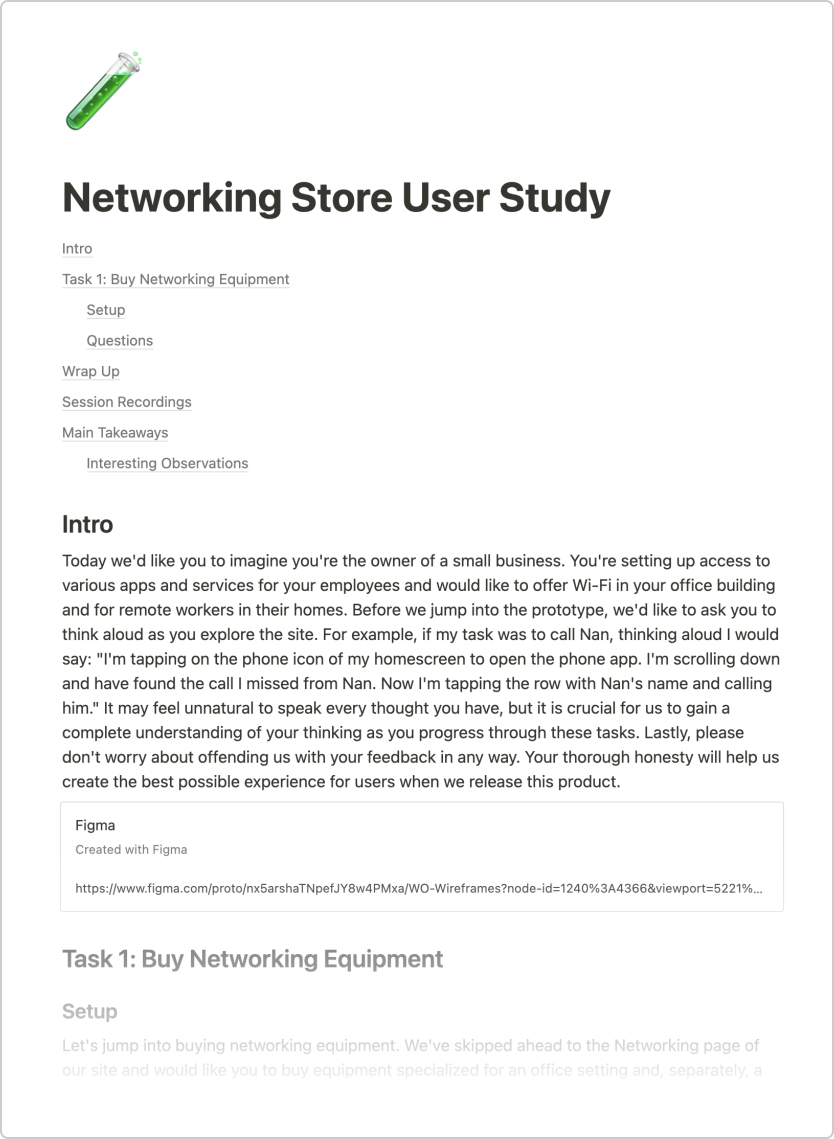
Web portal study
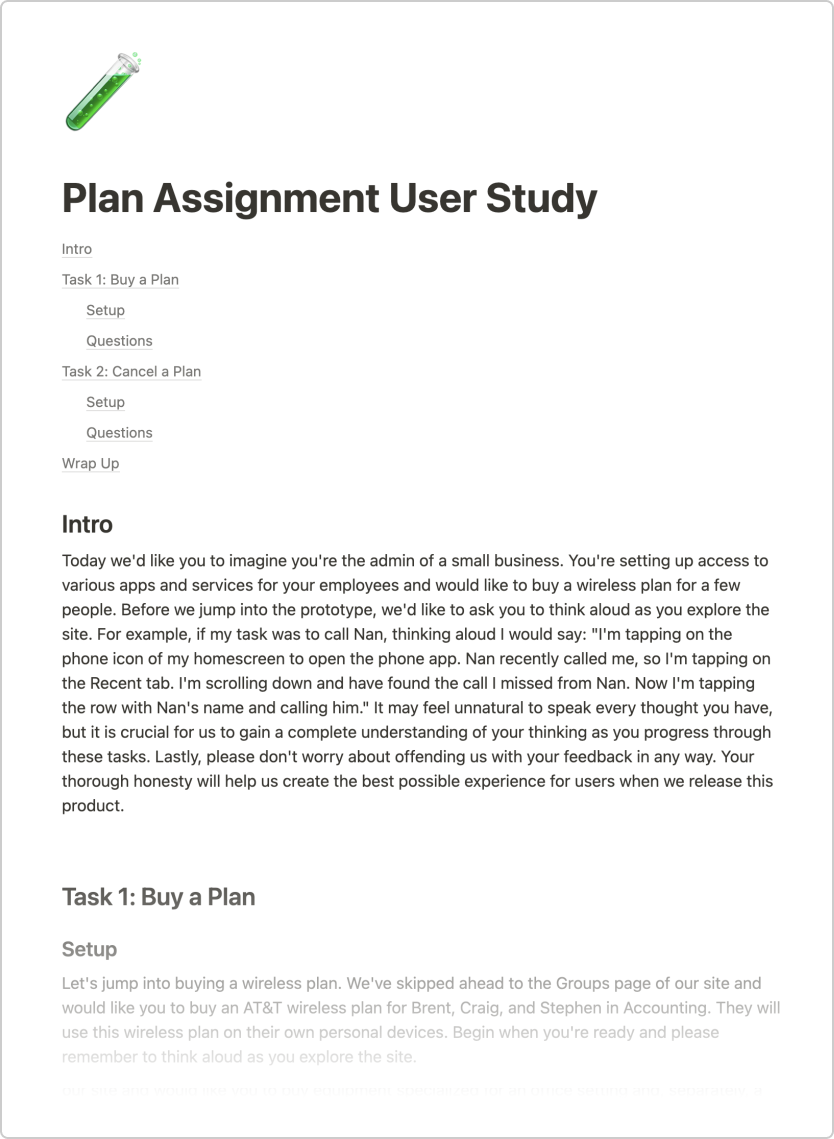
Web portal study
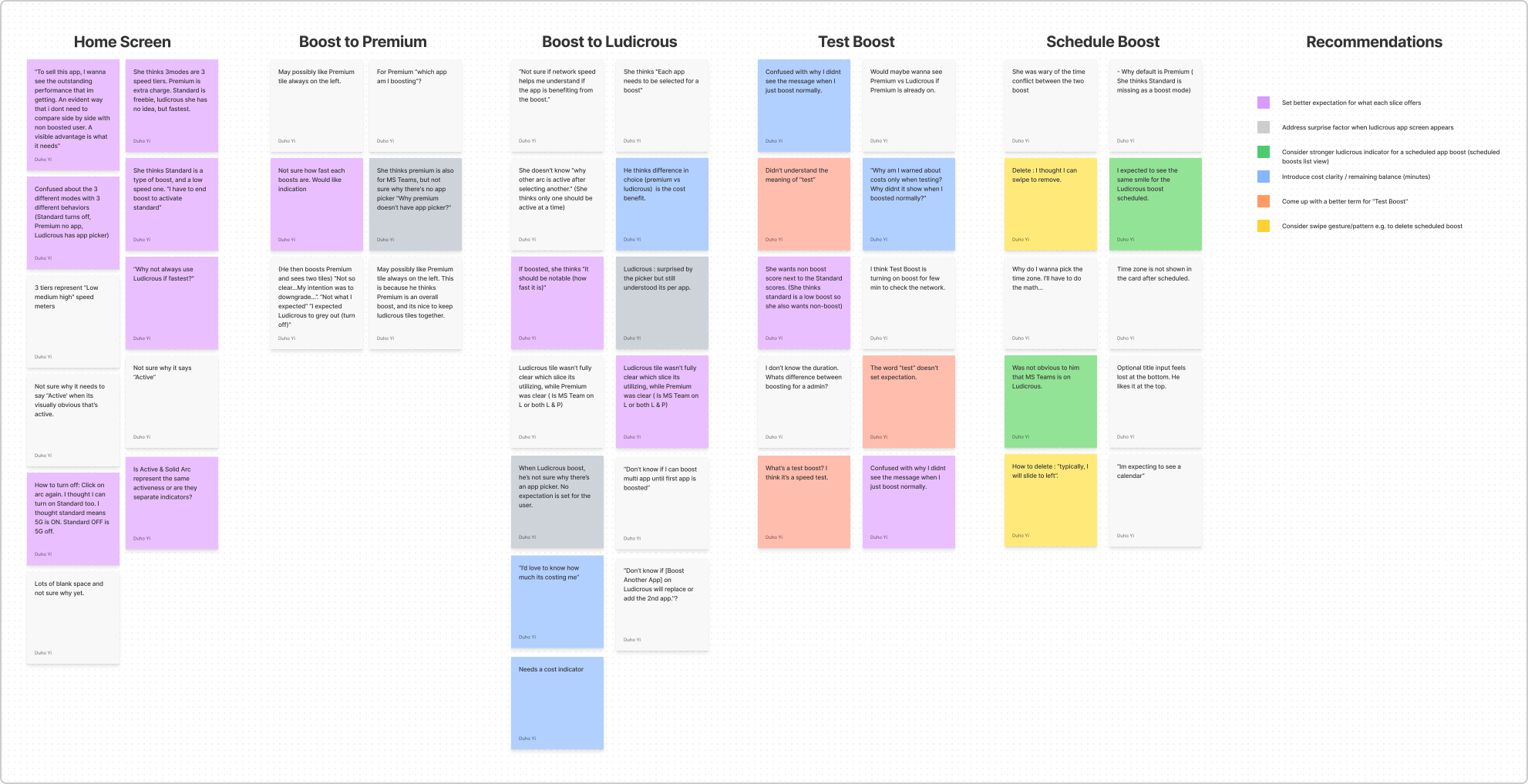
The figure below shows some of the affinitized, qualitative data we captured from the internal participants during the usability testing sessions using prototypes of the mobile app.
ARCHITECTURE
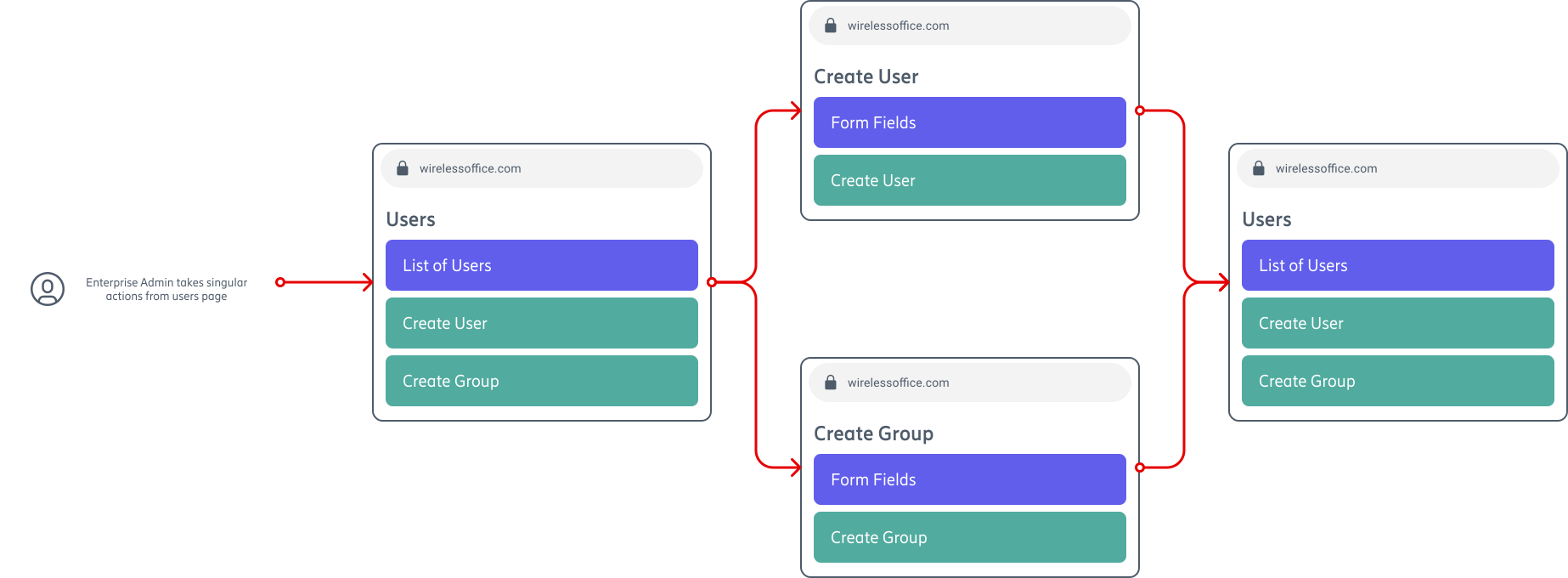
After some time spent conducting user interviews and usability tests on the enterprise admin web portal, it was helpful to capture a high-level view of the product's architecture.
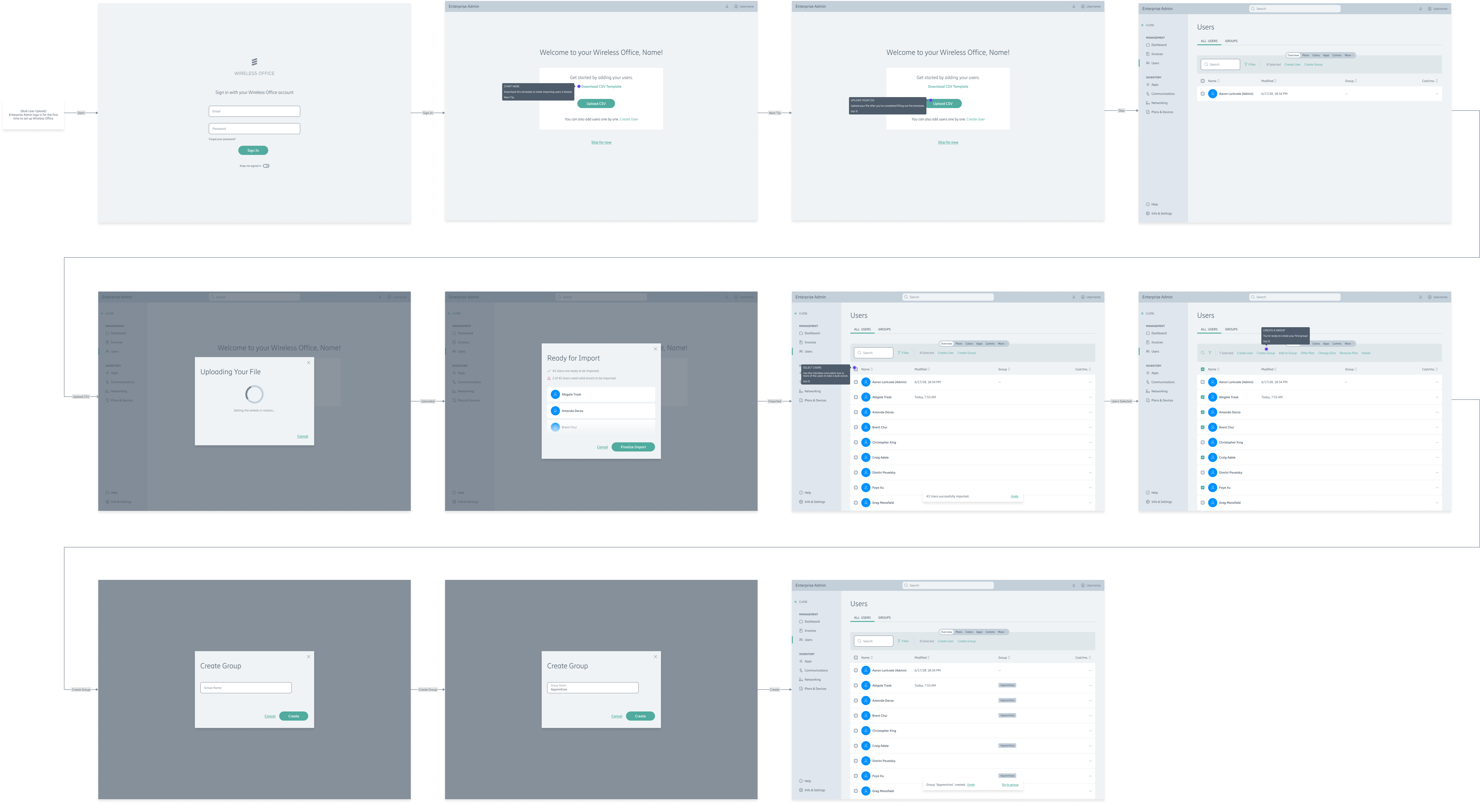
We continued refining the web portal experience, simplifying and streamlining the product through wireframe iterations. Here's a glimpse of the onboarding user flow.
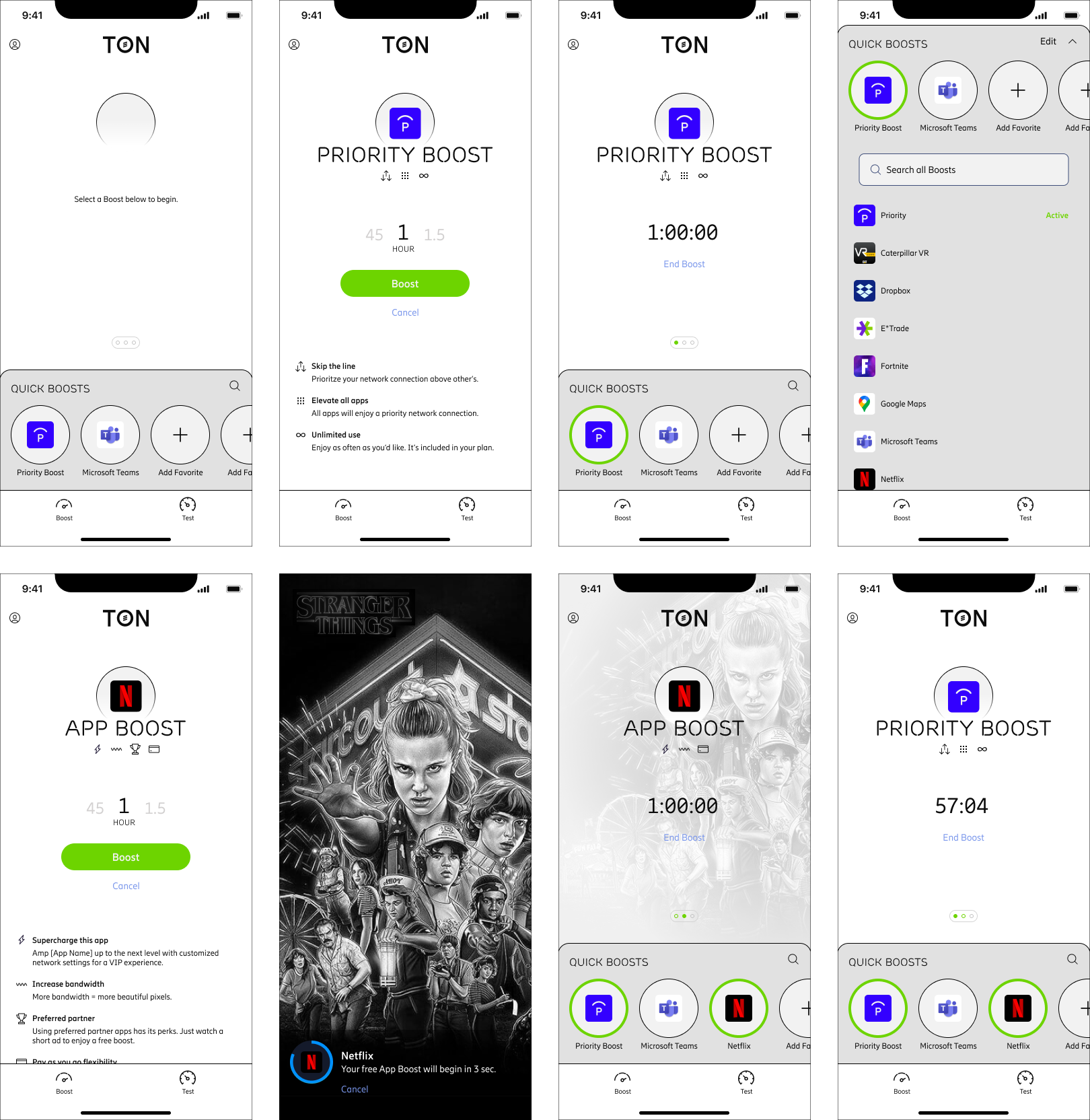
We also pushed the product vision and experimented with app-based marketing partnership concepts.
DESIGN SYSTEM
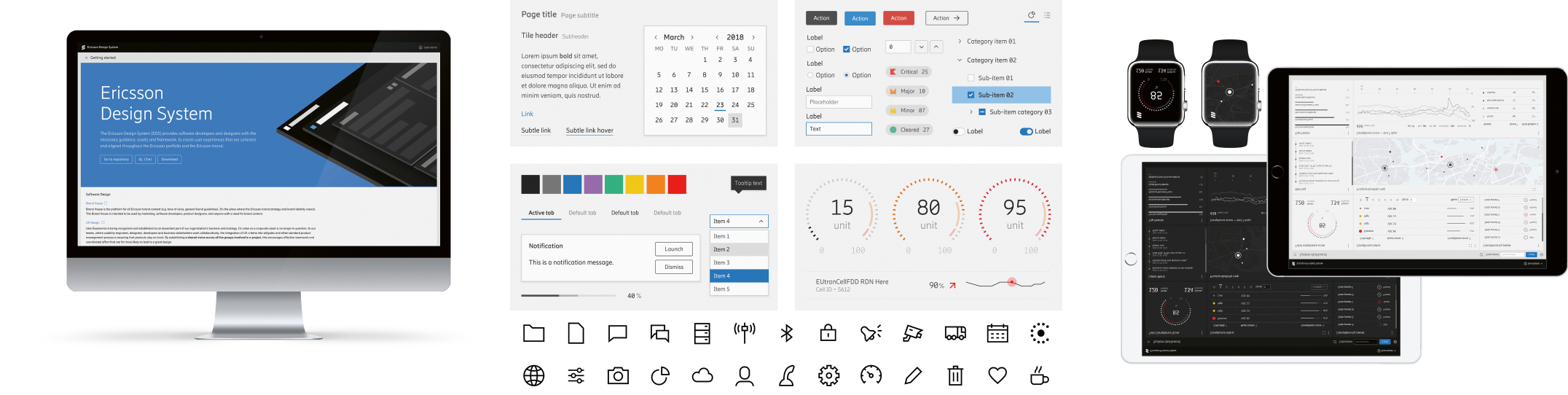
Before delving deeper into the next phase, it's important to mention that the design system played a meaningful part in the journey. When we first embarked on producing high-fidelity screens from the get-go, I was given the flexibility to create a new, proprietary look and feel, unbound from any existing Ericsson influence from either a visual or experiential standpoint.
Ericsson had an award-winning design system (EDS) already established, but that did not weigh much into our mission to develop a unique product. However, with some pushback from Ericsson's brand management team, we collaborated and steered the design to adhere closely to the EDS. The end result aligned well with the Ericsson ecosystem and product portfolio.
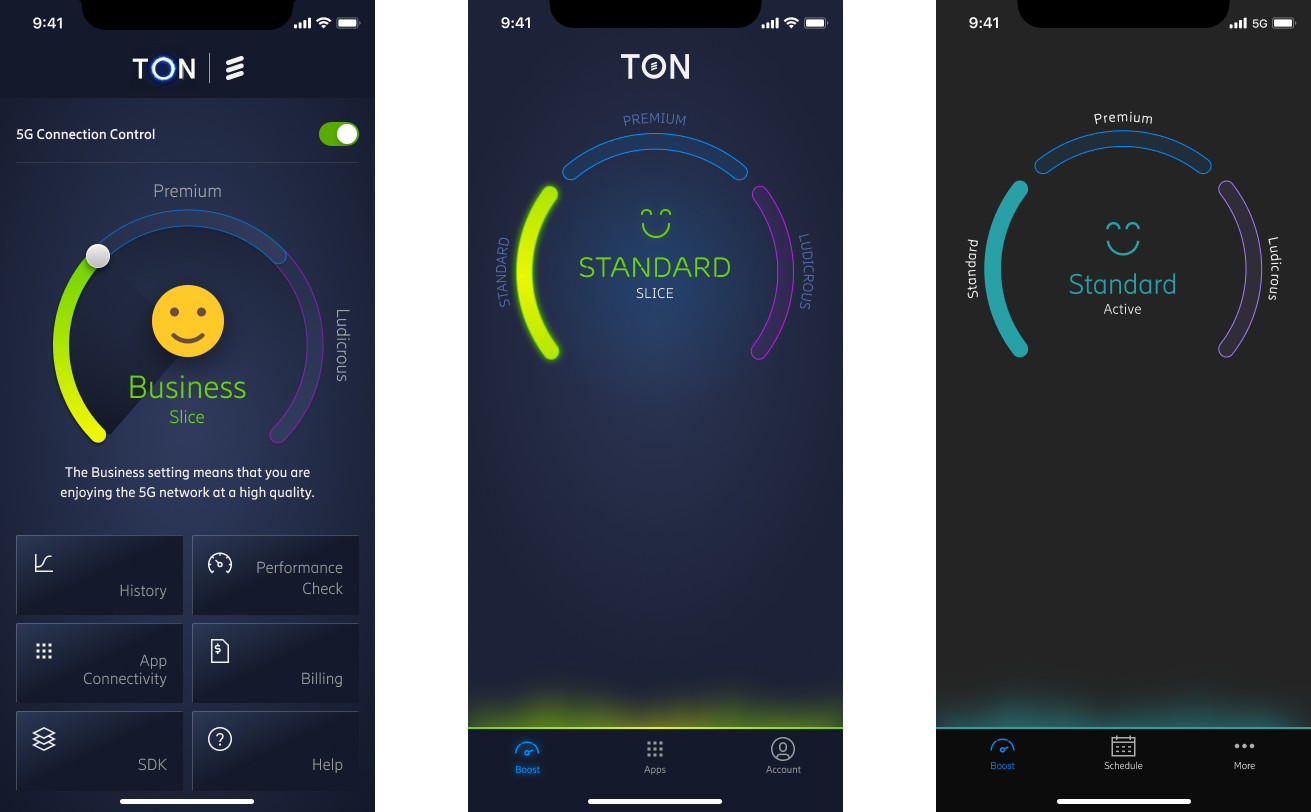
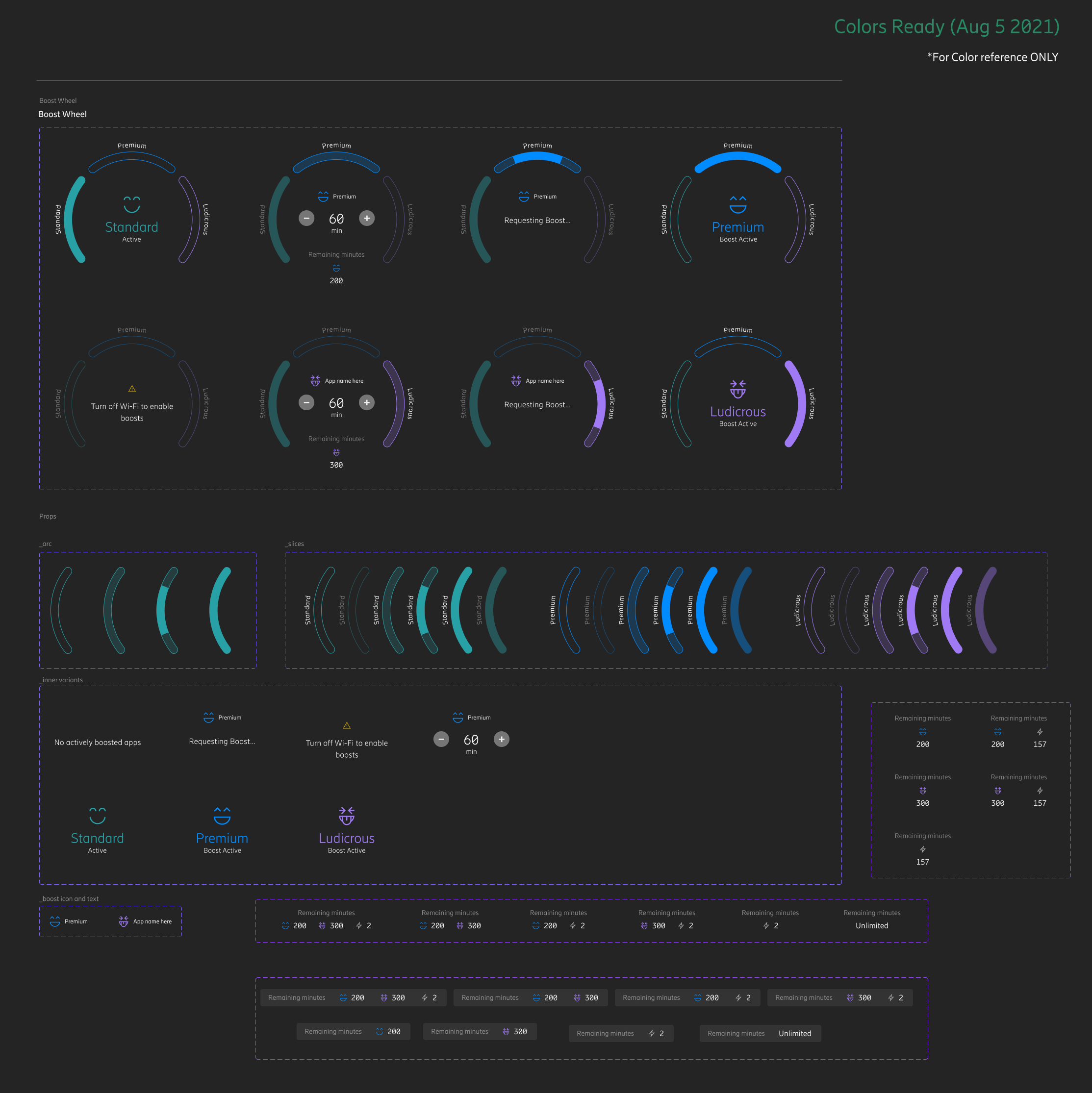
The emojis, representing the boost mode or "slice", were modified to align with Ericsson's iconography.

Evolution of the mobile app, from left to right, integrated with the Ericsson Design System.
Design system components showing the elements and variants that make up the boost mechanism.
INTERVIEWS AND USABILITY
At last, as the product matured and we developed multiple iterations of the mobile app, we were on our way to signing our first commercial agreement with an official carrier, SmarTone (CSP based out of Hong Kong). I was able to conduct remote, moderated interview sessions with a handful of participants from SmarTone's customer unit - essentially the account management group that operates as a liaison between Ericsson and SmarTone. Although we were prohibited from having direct contact with the customer, leveraging the customer unit helped bring transparency to the process and we were headed in a better direction.
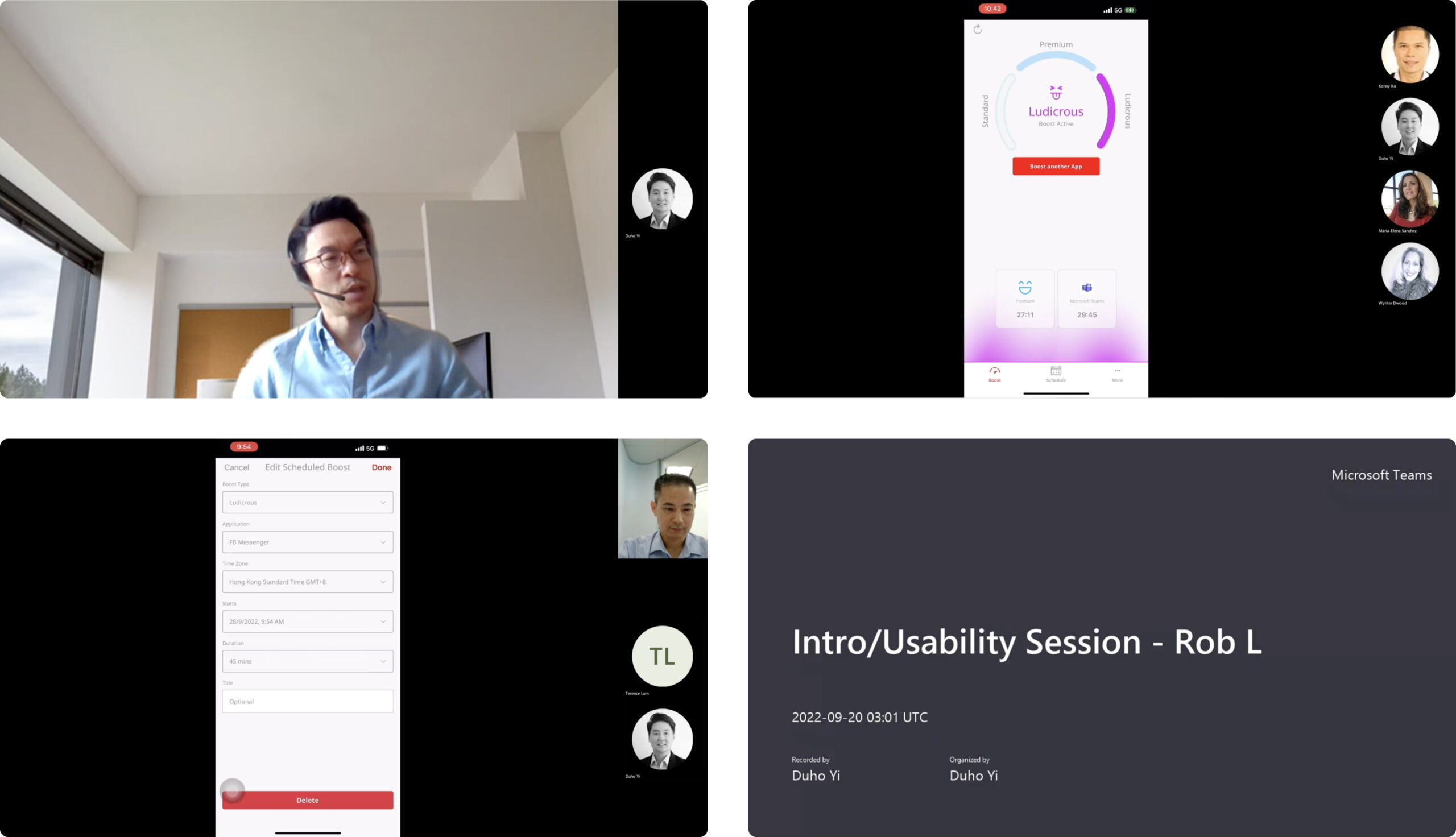
Sessions with customer unit via Microsoft Teams
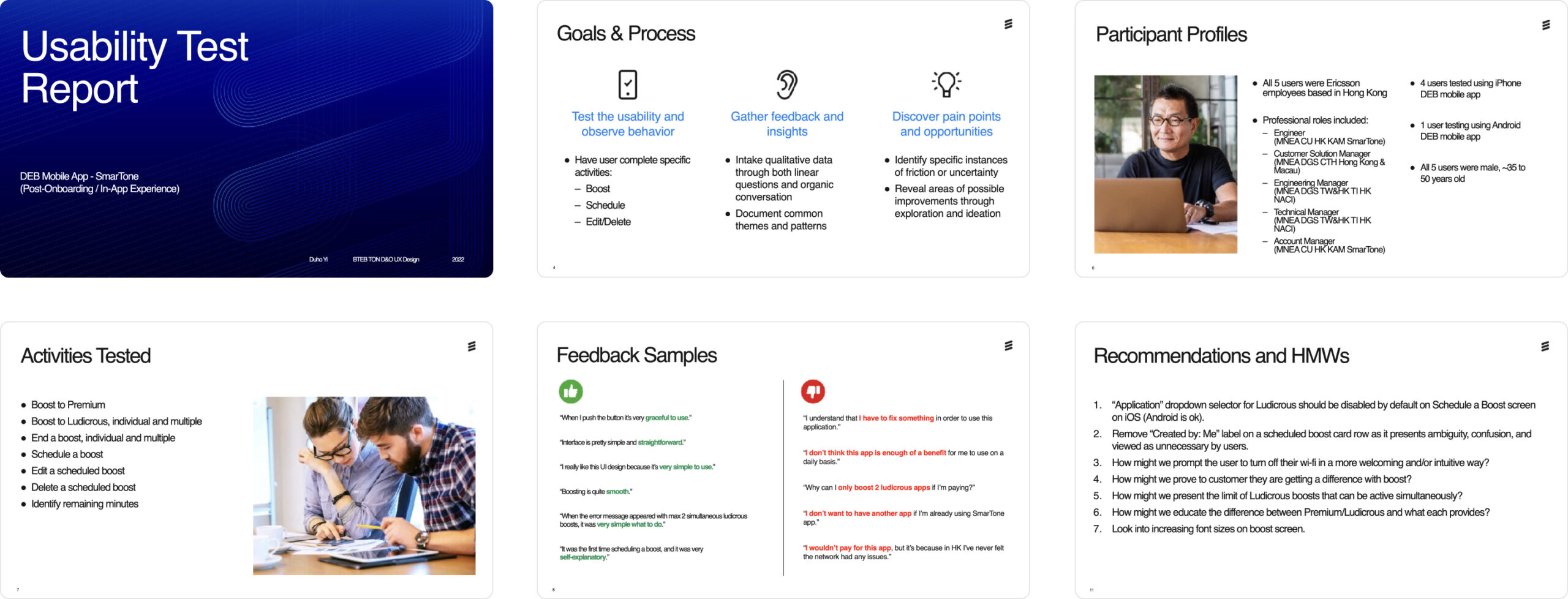
I produced a usability test report after connecting with SmarTone's customer unit. They performed specific tasks such as boosting to the various modes, scheduling a boost, and ending boosts during the remote sessions.
FEEDBACK
Any bit of data was like gold to me, as it was a difficult process even to get dedicated times scheduled with the customer unit that was in Hong Kong. Interactions with them were highly scrutinized and required approval from our business development team. Here are some notable highlights and feedback from the user research activities:
HMWs
- How might we prompt the user to turn off their wi-fi in a more welcoming and/or intuitive way?
- How might we prove to customer they are getting a difference with boost?
- How might we educate the difference between Premium/Ludicrous and what each provides?
Insight
- 4 of the 5 participants mentioned that it would be unlikely they would even use this app for their personal use.
- Ask user if they would like to extend their boost if it is about to expire.
- Should we more explicit when the user is getting charged vs not?
PROCESS REVISITED
At this phase of my journey at Ericsson One Network Solutions, I was hopeful in our improved process. I had more stakeholder buy-in and support to designing the right thing, and less reactionary pressure to design things right.
Unfortunately, this venture came to an abrupt halt as the business model changed to an API-based product. My role in the project ended in its entirety, along with a significant portion of the rest of the team at large.
High-fidelity design screens of the SaaS enterprise web portal.
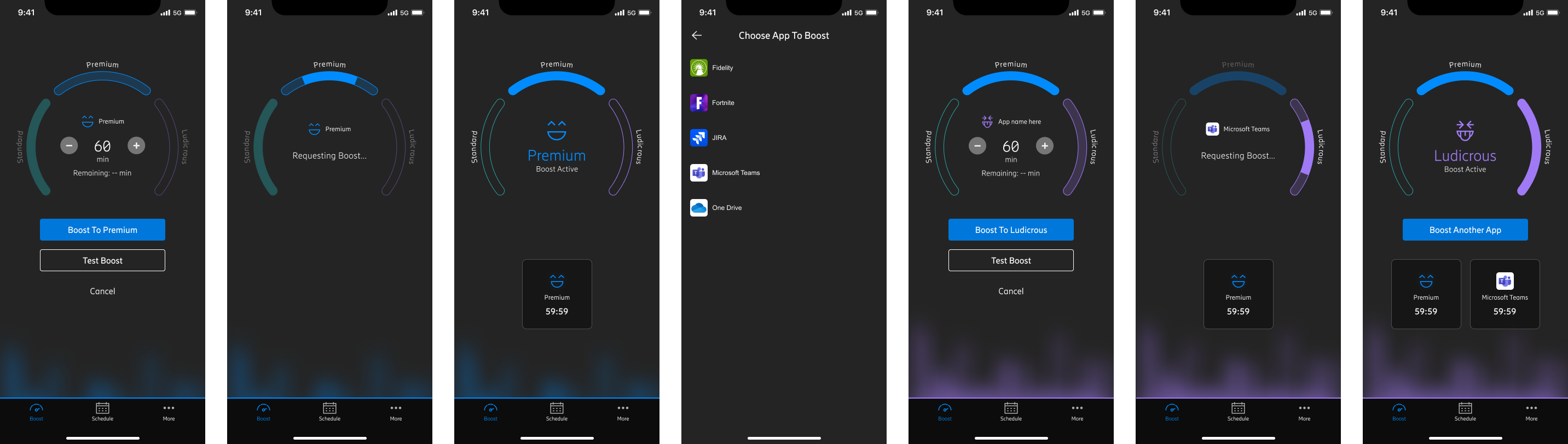
High-fidelity design screens of the iOS mobile app with boosting to "Premium" and "Ludicrous" modes.
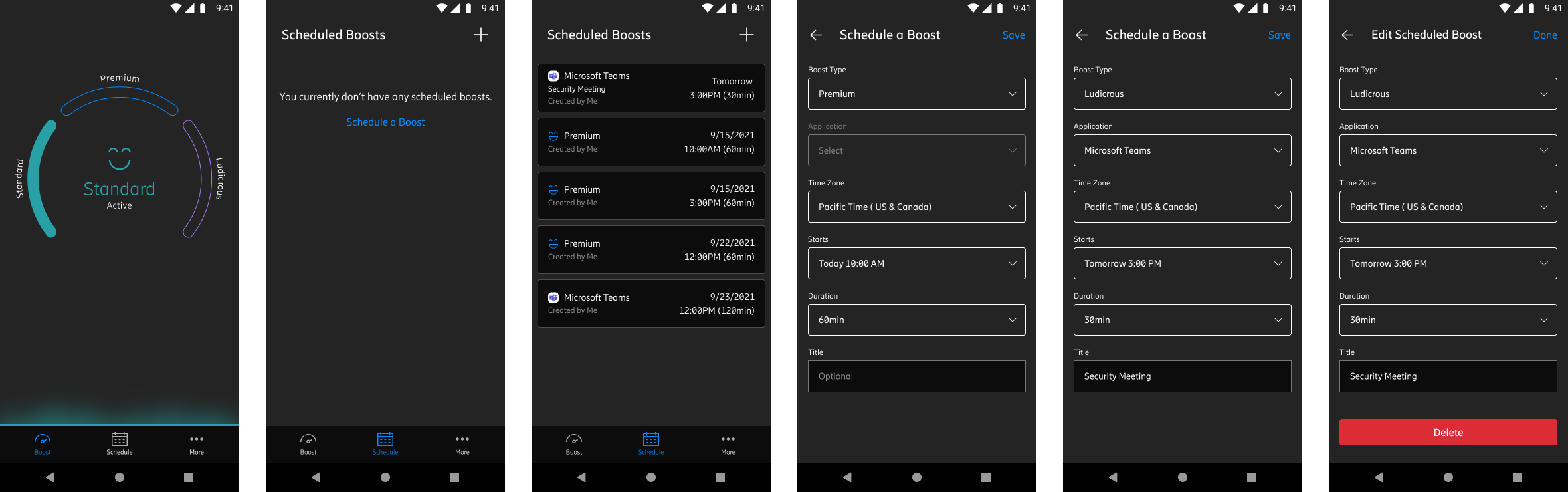
High-fidelity design screens of the Android mobile app with scheduling a "Ludicrous" boost.
RETROSPECTIVE
Looking back at the opportunity to work on Dynamic End-user Boost brings me great satisfaction. The road was bumpy, and the pace was fast-moving, especially earlier in this startup journey at Ericsson. Creating a new product offering rarely runs smoothly, and it was also my first taste at designing for the telecom industry. Contributing to the Ericsson portfolio was both challenging and rewarding, and I am grateful to have been a driving force behind the inception and development of DEB.